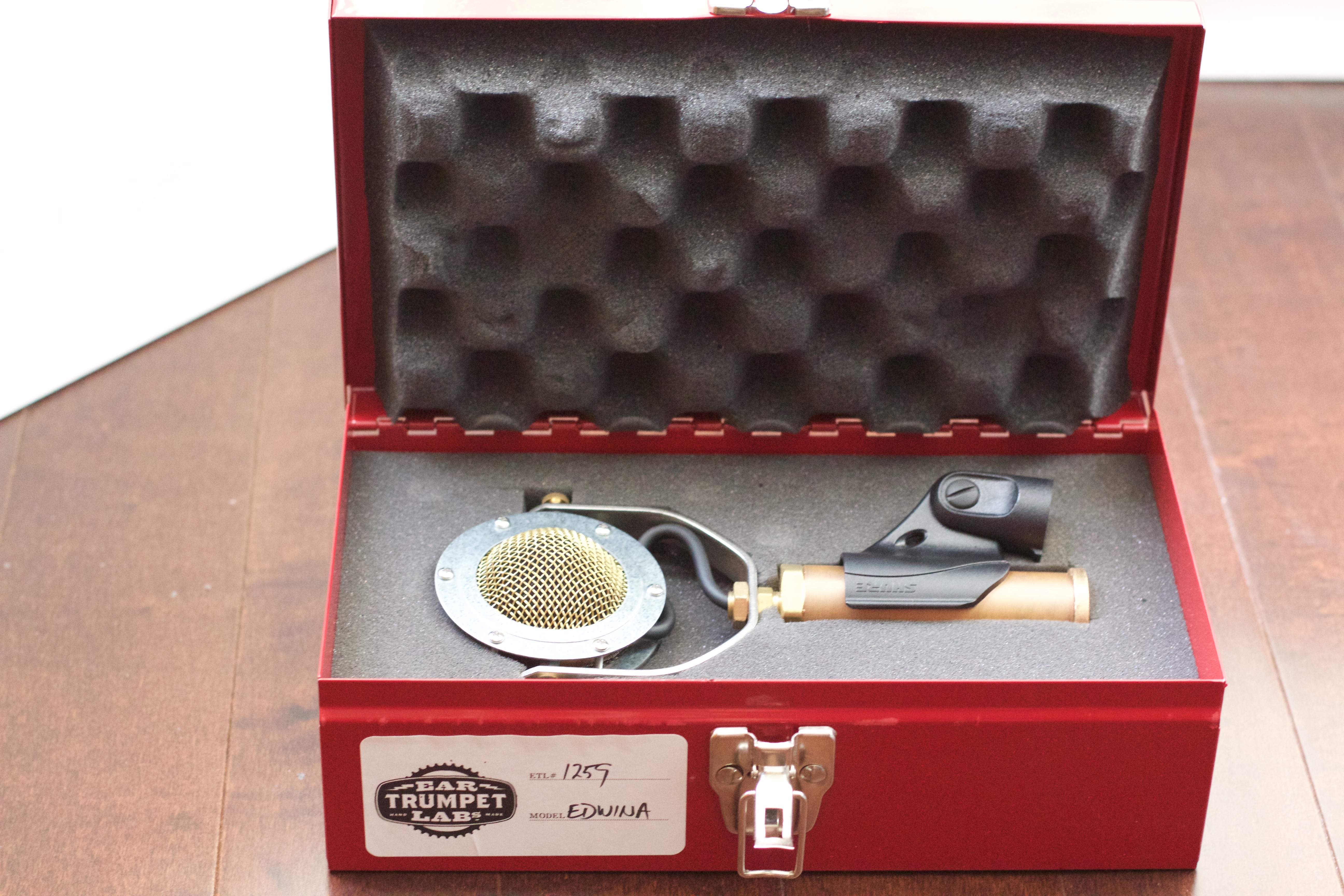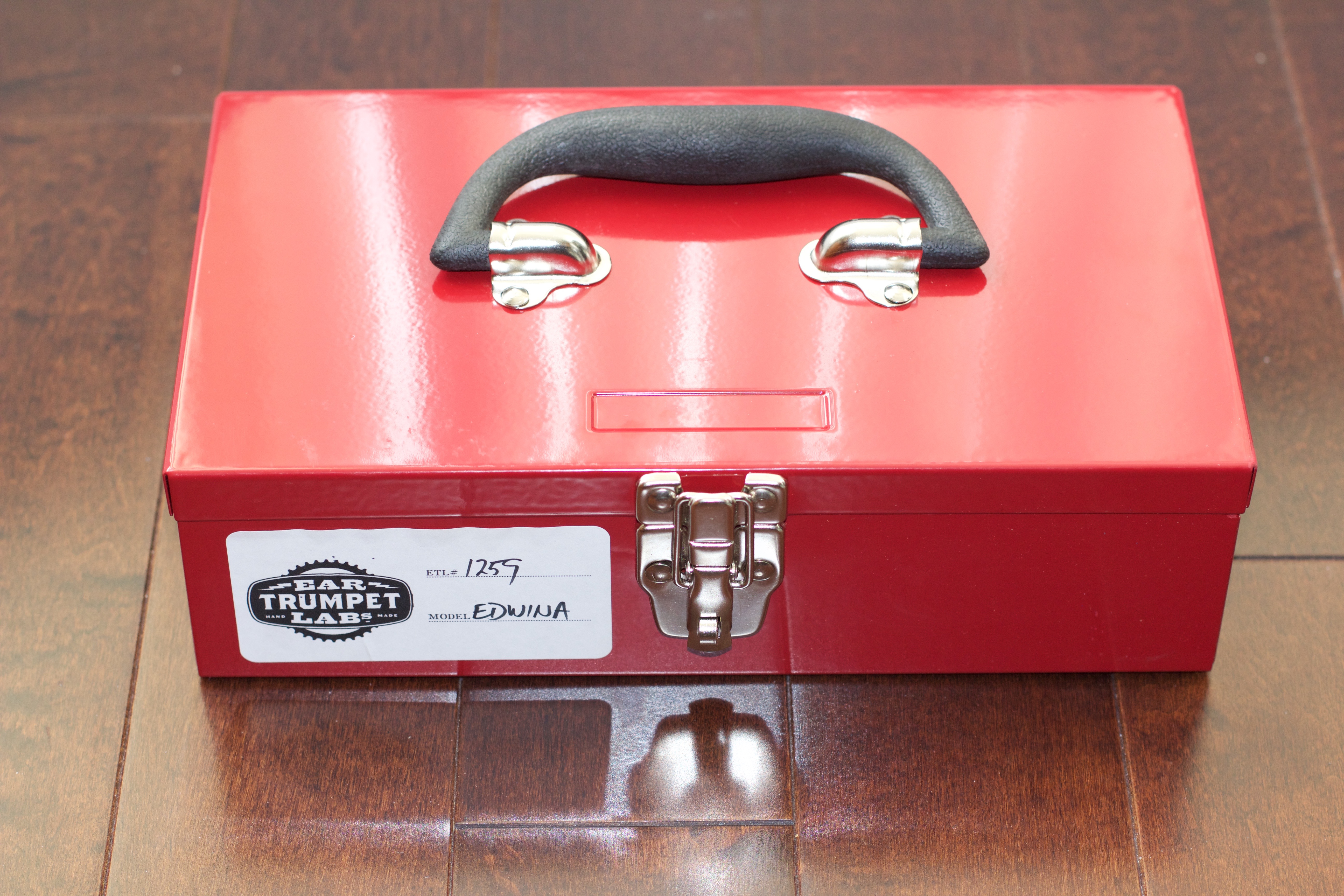
Received my Ear Trumpet Labs Edwina yesterday and man do I ever love it! Sounds as great as it looks. I need to play around with it for a bit to figure out what its strengths are, but my guess is, it’s going to give me exactly what I was hoping for — a natural, unhyped sound.
Category: Gear
Takamine P3FCN
LR Baggs – Lyric Acoustic Guitar Microphone
I was so impressed by the LR Baggs Lyric Acoustic Guitar Microphone demos I heard on the LR Baggs site that I made the leap and had one installed in my Seagull Artist Studio CW. I think I made the exact right decision. I’ve never been a huge fan of under saddle pickups (or internal mics) — the sonic compromise has always been too great. Yes, you can get a good tone from under saddle pickups, but it takes work. Lots of work. I have a Fishman Spectrum that truly helps get a “better” more realistic sounding (read miked) tone, but I never found it completely satisfying. And internal mics always seem to be less than ideal too. You get some “air” in the sound, but you also get a boxy tone along for the deal.
Now the Lyric is an internal mic — LR Baggs calls it a bridge plate microphone. The Lyric behaves much like an external mic in that your guitar feels and sounds like it’s being miked by a mic sitting a foot off your guitar. You get all of the good stuff that a mic brings to the game and none of the boxiness that internal mics usually have. Basically, it sounds fantastic! Well, it sounded fantastic after I adjusted the Mic Presence Control. When LR Baggs say the Mic Presence Control is “responsive” they’re not kidding. I spent a bunch of time recording different parts into Logic and then adjusting the control. Once I got it set right, the Lyric really did a great job of representing the sound of my guitar.
Of course, feedback can be an issue for acoustic instruments and the Lyric is a mic. I haven’t had a chance to gig with the Lyric yet, but I did crank my studio monitors (Yamaha HS80Ms) and play directly facing the speakers with no feedback issues.
The Lyric has impressed me. I’m definitely going to be using it live and I’m sure it’s going to end up on one of my future albums.
EZ Drummer – Indie Folk
There’s nothing like a great drummer and I’m lucky enough to work with one of Canada’s finest, Dave Patel. But for writing, EZ Drummer has been an amazing tool. I just picked up the new Indie Folk add-on and it sounds incredible. I particularly like the Slingerland kit in the 4 mic configuration — truly massive tones. Getting lots of ideas for the next Sixteen Different Minds record!
StrapKeeper
I love it when a piece of gear does what it says it’ll do. Yesterday, I came home from teaching and the StrapKeeper I ordered from Tapastring Guitar Care was here. For those of you who don’t know what a StrapKeeper is, basically, it’s a little add on device that helps keep your strap on your acoustic guitar. Other than getting the little nylon retainer on the end pin, installation (if you even want to call it that) was a breeze. With the StrapKeeper on my guitar, I think it would take A LOT to get the strap to fall off. Terrific solution for not much money!
New Gear
I’ve been updating my studio and I thought I’d write a short post about the hardware and software I’ve picked up.
The biggest change has been the addition of a brand new Mac Mini. I bought a 2.6 GHz Intel Core i7 with 16 Gigs of RAM and a one terabyte Fusion Drive. To say the computer has some serious grunt would be an understatement. A massive understatement. I seem to have no real limits now when I use Logic. I haven’t been able to bring the computer to its knees and that’s a very, very freeing feeling. Logic is showing eight cores on this quad core chip (which seems odd), but I’m not complaining!
I also updated Pianteq Play to Pianoteq Stage and purchased the Blüthner Model 1 add-on. I’m not a piano player, but the Blüthner Model 1 is truly inspiring to write with and I’m positive it’ll be on the next few albums I’m working on now.
And lastly, I bought the new Sweetone from Sonimus. Just a gorgeous, simple and effective eq/filter. I’ve already used it on some liners for radio stations (i.e. This is Jamie Bonk and you’re listening to X radio station…) and it worked beautifully. I used the Sonimus Satson and SonEQ plugins extensively on my last solo record (Necessity) and Sweetone is sure to become a go-to plugin for me in the future.
Blue Chip Picks
Just received two new Blue Chip picks in the mail today… A TD 40 and a TP-1R 40. Basically, they’re backups for Blue Chips I already have. Yes, I know, Blue Chip picks are INSANELY expensive ($35 each). So if you’re a player who likes to fling picks into the audience or you regularly lose picks, Blue Chip picks are not for you (unless you happen to be a rock star with a boatload of disposable income that is!). I almost never lose picks (still have picks from high school) and I can’t think of the last (or the first) time I flung a pick into an audience, so I can kind of rationalize the price. Cost aside, Blue Chips are hands down the best I’ve ever used — terrific tone, almost indestructible and they stick to my fingers like no other pick. Love ’em!
The Making of Necessity
When I started writing for my seventh release Necessity I didn’t, like I never do, have a clear idea of where the record would end up — didn’t know what songs would be on the record, didn’t think the album would feature the electric guitar and certainly didn’t anticipate the overall vibe of the album. But in retrospect, it all seems very obvious.
A few years ago I started going back to my “old” way of writing. For the most part, I now write everything down on paper. I have a sketch book (one of those little Moleskine manuscript paper books) that I write down all kinds of ideas — chord progressions, melodies, licks, etc. I had been writing directly in the computer, but going back to writing on paper just seems to work better for me right now. A little while ago, I also started documenting ideas into a portable recorder (a Zoom H2N). So between the manuscript paper and the recorder, I feel I’ve streamlined my writing process. I know this may not seem like big deal, but this “new” way of working really has helped me to be more creative.
For Necessity, I also changed how I record. I suppose my current approach is a little (or a lot) more traditional, but it feels very freeing to me. If you think of 70’s style recording (write a song, record bed tracks, then overdubs, then leads, then mix and finally master) that’s how Necessity was made.
So here was the basic workflow for the record. After I wrote the tunes, I created bed track templates in Logic Pro 9. Essentially, I did mockups of the songs using loops from EZdrummer and wrote rough basslines using Spectrasonics Trilian. Sonya (Mitlewski) played all of the keys with piano/Rhodes/Wurlitzer sounds coming from Modartt Pianoteq Play and pads from Spectrasonics Omnisphere. I recorded my rhythm guitars using my Seagull Artist Studio CW into two mics and my Godin Freeway SA into a Line 6 HD300.
I then bounced stereo stems of the bed tracks as: drums, bass and harmony (keys and rhythm guitars). Those stems, along with charts, were sent off to Dave Patel (drums) and Henrik Bridger (bass). Dave and Henrik then replaced the MIDI loops/parts with their original parts in their respective studios (Dave’s studio is called DaWG Studios and Henrik’s studio is called Château Juliet) and sent their parts back to me.
After I had all of the bed tracks done, I recorded my leads, which were all recorded with my Godin Freeway SA into a Line 6 HD300. The outputs of the HD300 went into an Apogee Duet and were recorded in Logic. One of the reasons the album is called Necessity is that I basically HAD to record leads directly. Right across the street from me there are three 30-50 storey condos being built. It’s non-stop noise. Recording the electric directly eliminated any noise “concerns”. That said, I’m truly happy that I used the electric (rather than an acoustic) for this record! I think there’s a saying about necessity…
One other recording “change” with Necessity is that I went back to bouncing individual tracks down as audio files. For instance, all of the MIDI keys were bounced as audio. When it came time to mix, everything was an audio file. I’m not sure how that affected the sound or feel of the record, but it helped me to focus and continually move forward. And finally, I mastered the album in iZotope Ozone 5.
So that’s the somewhat techy description of the making of Necessity! For those who want even MORE tech, check out the list of gear/plugins I used below.
—————-
Apple MacBook – 2.16 GHz Intel Core 2 Duo | 4 GB 667 MHz DDR2 SDRAM
Gear
Here’s a somewhat up-to-date list of the gear I’m currently using…
Guitars
I use and am endorsed by Godin Guitars
- 2010 Eastman MD515 Mandolin
- 2010 Seagull Artist Studio CW
- 2008 Godin Freeway SA
- 2006 Godin Glissentar
- 2004 Godin Multiac Grand Concert SA
- 1997 Takamine CP-132SC
- 1981 Ibanez AS-200
Studio
- MacBook
- 22 Inch Acer Display
Software and plugins
- Logic Studio
- Spectrasonics Omnisphere
- Spectrasonics Stylus RMX
- Spectrasonics Trilian
- PSP Xenon
- PSP Audioware Vintage Warmer
- PSP 84
- PSP Oldtimer
- PSP ClassicQ
- PSP ConsoleQ
- PSP McQ
- PSP NobleQ
- PSP PreQursor
- PSP RetroQ
- Sonimus Satson 1.2
- Sonimus SonEQ
- u-he Zebra (CM)
- Nucleus Soundlab MultiBoost Pak
- Izotope Ozone 4
- Izotope Alloy
- IK Multimedia Amplitube 2
- IK Multimedia Amplitube Jimi Hendrix
- ManyTone ManyBass
- Toontrack EZDrummer
- Toontrack Nashville EZX
- Toontrack Vintage Rock EZX
Samples
- Kirk Hunter Studios – Emerald Symphony Orchestra
- Spectrasonics Backbeat
- Spectrasonics Liquid Grooves
- Spectrasonics Burning Grooves
- Spectrasonics Retro Funk
- Spectrasonics Metamorphosis
- Spectrasonics Bass Legends
- Spectrasonic Supreme Beats – African/Contemporary
- Ilio Ethno Techno
- Ilio Stark Raving Beats
- Sonic Reality Vintage Timetraveler
- Best Service Ethno World
- Best Service Hallelujah
- Best Service Dance Mega Drum-Kits
- Zero-G Ambient Volume 1
- Zero-G Ambient Volume 2
- East West Orchestra
- Wizoo Acoustic Drums
- Beta Monkey Drum Loops
Hardware
- Apogee Duet
- M-Audio Axiom 49
- Line 6 POD HD300
- Roland GR-20
- Fishman Spectrum
- Fishman Aura – Nylon String
- Tech 21 Blonde
- Line 6 POD
- Yamaha HS80M
- Audio Technica 3035
- Rode NT1-A
Live
- Big Namba Studio Backpack
- SR Technology JAM 150 Plus
- Tonebone PZ-Pre
- Fishman Spectrum
- Fishman Aura – Nylon String
- Yamaha Magicstomp Acoustic
- Ernie Ball VP JR.
- Korg DT-10 Tuner
- Yamaha MFC1
- Roland JC-120
- Shure SM-58
- Shure SM-57
- Mackie 1604
- Mackie SRM150 (2)
- Yorkville Y112 speakers
- Yorkville speaker and mic stands
- Hercules Guitar Stands
- Planet Waves cables
Acoustic Pedalboard (2012)
I don’t think I’ve ever met a guitarist who wasn’t on some kind of a gear quest — on that never ending torturous yet joyous search for a particular piece of gear that you absolutely know will present the perfect tone. Or feel. Or really anything good. And you will finally be able to calm the dark voices in your head.
Those voices do stop — for a few minutes, maybe an hour or if you’re really lucky a day, but the inevitable rears its ugly head. You actually do truly without a doubt need the next piece of gear. It matters. Cue the quest redux.
When I talk about those on the quest, I’m not talking about the “others”. I’m marching right along with everyone else. Ask my wife about my affliction and she’ll tell it’s in no way a subtle thing.
But I do recognize that too much “stuff” gets in my way — artistically speaking. Smarter people than myself have labelled it option anxiety and I think that’s a pretty good term. I started noticing a few years ago that having more plugins (synths, compressors, delays, etc.) wasn’t helping me to write better or more efficiently. It was slowing me down and sometimes to a crawl. So I started looking at what really mattered to me, chose the plugins that resonated with me and focused strictly on those.
A little while later, I started applying the same philosophy to my guitar gear. What didn’t work was out. Didn’t matter how much I thought a piece of gear was really really cool. What mattered was — does it work for what I do. How will this new guitar or effect pedal help me to get to the core of my music in a more elegant manner.
So this leads me to my current acoustic pedalboard. It’s a simple affair in my opinion: a Fishman Spectrum into a Tech 21 Boost D.L.A into a Tech 21 R.V.B. Yes, it’s not an acoustic straight into a nice mic, but for my kind of music that’s not really possible in a live setting. And I absolutely love playing with delay and reverb. The last piece in this pedalboard puzzle was the Voodoo Labs Pedal Power 2 Plus I added about a week ago. I suppose it’s weird to buy a pedal to take away sound, but that’s exactly what it did — it took away the noise issues I was having. Everything sounds a lot cleaner now and for lack of a better term “nicer”.
I’m truly happy with this board and I think it’s going to stay like this for a long while. It has to — I have no more space for any pedals! Of course, I could always get another board…